

The Bones of “These Days”
Most of us had seen it before we heard about it from Sami.
Change is inevitable. We can look back on our pasts with reverence, but if we fail to learn and grow from our experiences, instead looking back with a flawed nostalgia, we risk stasis, becoming outdated in our thinking, or worse.
Of course, when everything’s changing, when we can’t afford to feed our families or put a roof over our heads, or when our loved ones are dying and we no longer recognize the community we’ve grown up in, how do we survive? What do we hold on to?
These are questions at the core of many of the stories in Blood Work, but whereas the majority are limited to the perspective of a single character, “These Days” explores those questions from the point of view of a community in Kahaluʻu, from the point of view of the “we.”
I’d never written in first person plural before, but when Kristiana Kahakauwila gave our class a prompt related to that POV, I knew who I wanted to represent in the story, but it was awkward and strange at first; how do you capture the multitude of perspectives and voices of a community of people?
To help, I read Faulkner’s “A Rose for Emily” and Gary Park’s “A Toast to Rosita” as well as Kristiana’s “This is Paradise.” And although he doesn’t write in first person plural, I returned to Saunders, who loves to play and experiment with form (side note: the main character of the story, Sami, is inspired by Saunders’ comedic undertones and a woman in my neighborhood who used to hula hoop daily during the pandemic). These examples gave me an idea of how to approach the story, but I still couldn’t wrap my mind around making a community into a character, and then I realized I didn’t have to.
Instead, I thought about all of the voices and characters that could be represented and how the community would tell their stories.
Of course, then there was the matter of the story itself. So, I asked myself, what brings this community together? What are the pressure points and tensions?
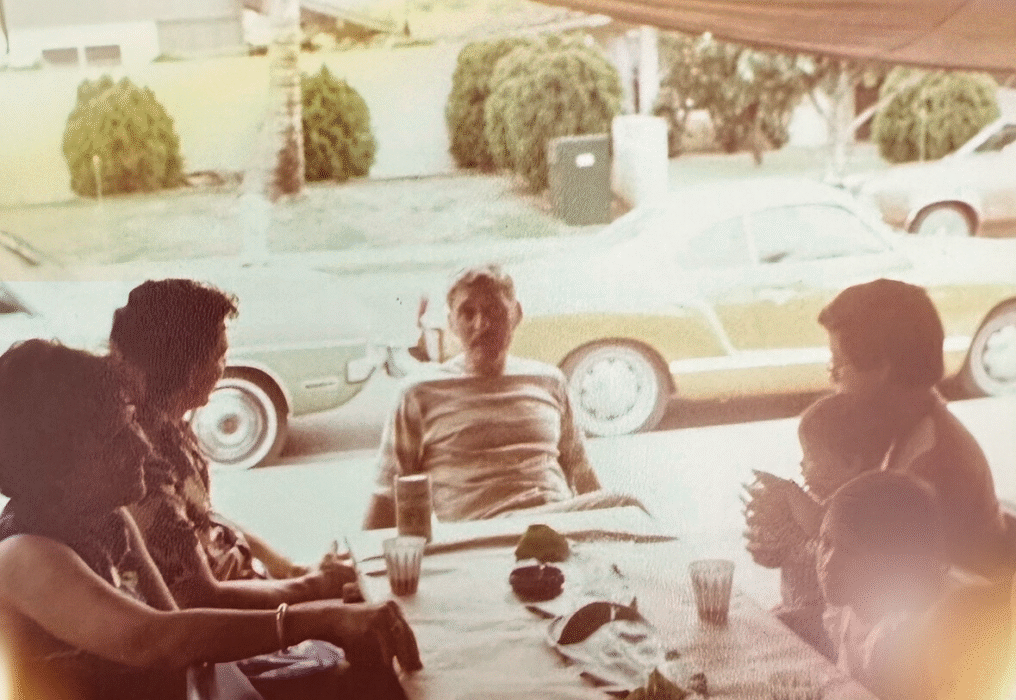
Photo credit: Donald Carreira Ching
With “These Days,” and with all of the stories in Blood Work, I wasn’t interested in nostalgia or flawed notions of how much better things were before, how “these days” things aren’t the same as they were in the past, but I knew that a big part of being local, that is feeling like you are a part of Hawaiʻi, involves that connection to a past. It took me a long time to realize that nostalgia was the key to the conflict in this story, for Sami, who wants to do things differently, and for the community telling her story and holding on to what they can.

In a recent interview on HPR, DW Gibson asked me about sustainable economies and what that means to the characters in this collection. The interactions of the characters in “These Days” is a good example of what I’d consider a sustainable economy and community, that is one where folks look out for each other, where they recognize a responsibility to the person next to them whether they know them or not, and where they care what happens to the people and places that sustain it.
I worked through many versions of the ending. One was previously published in Bamboo Ridge #124. The version I consider the true, final version is in the collection. It’s the one I think best represents the theme and community at the heart of the narrative. It’s the one where the conflict is addressed.
Speaking of community, I’ll be wrapping up events for the year this week. If you’re on Oʻahu, you can catch me at Leeward Community College on Tuesday, 11/18 at 10:30 AM in Room GT-105. If you’re on Maui, please join me for a free event at UH Maui College on Thursday, 11/20 at 12 PM; you can RSVP for the latter here.
Hoping to talk story soon,
Donald
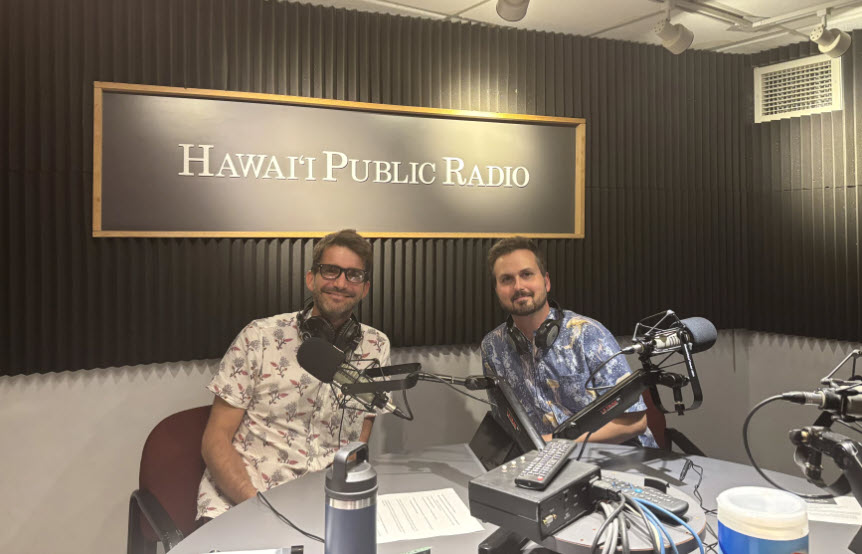
Photo credit: HPR
Talk story